Metallic material
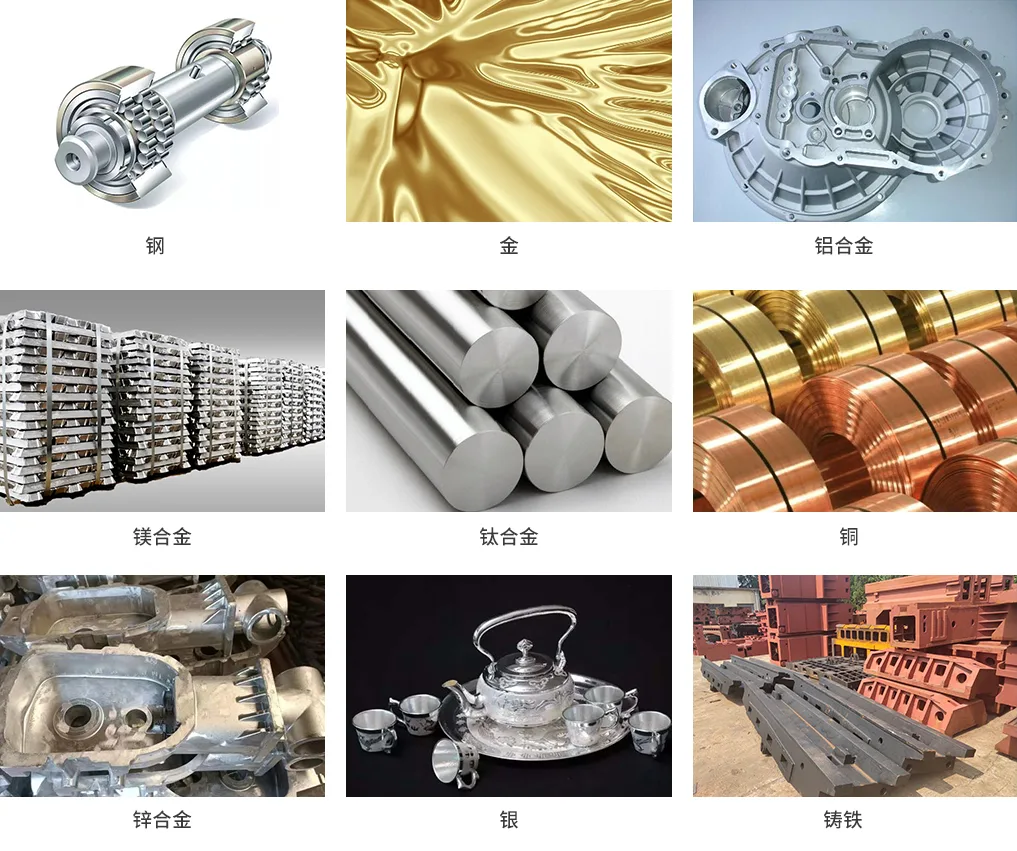
Metallic materials refer to materials that have properties such as luster, ductility, easy conductivity, and heat transfer. Metal materials are usually divided into ferrous metals, non-ferrous metals and special metal materials.
Metallic materials refer to materials that have properties such as luster, ductility, easy conductivity, and heat transfer.
Metal materials are usually divided into ferrous metals, non-ferrous metals and special metal materials.
① Ferrous metals are also called steel materials, including industrial pure iron with a total impurity content of<0.2% and="" a="" carbon="" content="" of="" no="" more="" than="" 0.0218="">
② Non-ferrous metals refer to all metals and their alloys except iron, chromium, and manganese. They are usually divided into light metals, heavy metals, precious metals, semi-metals, rare metals and rare earth metals. The strength and hardness of non-ferrous alloys are generally higher than that of pure metals. And the resistance is large and the temperature coefficient of resistance is small.
③Special metal materials include structural metal materials and functional metal materials for different uses. Among them are amorphous metal materials obtained through rapid condensation processes, as well as quasicrystalline, microcrystalline, nanocrystalline metal materials, etc.; there are also special functional alloys such as stealth, hydrogen resistance, superconductivity, shape memory, wear resistance, vibration reduction and damping, etc. and metal matrix composites, etc.